


Collaboration has been a massive buzzword in the UC landscape for some time now. We’re quickly discovering that inter-office phone calls and emails aren’t the best way to stay connected in an environment that’s becoming increasingly agile and remote. In recent weeks specifically, companies of all sizes have been forced to find better ways of working together when individuals can’t share an office space. That’s where tools like Slack and Microsoft Teams swoop in.
These collaborative environments create an incredible space for internal employees to discuss projects and work hand-in-hand on tasks. However, there’s a problem. Collaboration tools are designed to connect internal workers. Often, external employees, clients, and contractors are ignored.
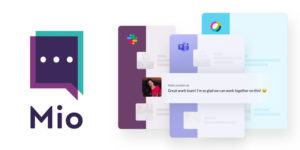
Mio has stepped in to address that problem by extending Slack’s shared channels concept to users of Microsoft Teams. Microsoft Teams users can now invite external contacts to join universal channels from any Microsoft Teams tenant or Slack workspace.
I spoke to Tom Hadfield, Mio CEO, about the solution.
Creating Microsoft Shared Channels

Tom Hadfield
Mio is a company committed to powering seamless communication experiences between people on Microsoft Teams, Webex Teams, and Slack. Although Mio has seen a massive response to its introduction of the new Universal Channels solution, some use cases are standing out more than others.
For instance, Hadfield told me that the thing that’s really resonating in this complex time is the ability that Mio gives businesses for customers to have shared channels between Microsoft Teams users. For a long time now, Slack has offered shared channels to people with different Slack environments. However, if you wanted to connect with an external company or individual on Microsoft Teams, there’s no simple solution. Even if both of you are using Microsoft Teams, one would have to create a guest account for the other.
“Professional services companies like marketing brands, lawyers, investors, and accountants are all seeing a growing need to connect with people through Microsoft Teams. They don’t want to rely exclusively on guest access. However, because Microsoft doesn’t offer a shared channels solution, many teams are often forced back to email.”
The Use Cases for Mio Universal Channels
Mio’s universal channels allows business leaders to connect their Microsoft Teams conversations with conversations in Slack and Cisco Webex Teams. As Tom told me, most of the company’s customers are Slack clients looking to talk to external customers or colleagues in Microsoft Teams. However, as the spike in usage of Microsoft Teams continues to grow, people are beginning to search for a shared channel experience in Teams too.
“The only way to speak from one Microsoft Teams user to another from a different Microsoft Teams environment is to set up a guest account. Although Microsoft will likely want to create a shared channels experience eventually, that’s not an option now.”
“This means that UX and security is compromised whenever a team is using Microsoft Teams to connect with external users”
Tom noted that Mio believes that the future of intercompany collaboration is based in channels. Channels are more searchable, open, and collaborative in nature than direct messaging. The demand for these channels is at the core of the many use cases that Mio appeals to.
“We have marketing agencies that are using Mio to have real-time meetings with their clients through Microsoft Teams for the first time. When you can do this, project timelines are accelerated, billable hours go up, and relationships blossom between brands and their clients.”
Who Benefits from Intercompany Collaboration?
Hadfield shared that numerous companies are already seeing the benefits of Universal Channels from Mio. The company is currently working with a venture capital firm that has all the companies that it has invested in together on a shared channel. This allows for a significant link between companies in an investor’s portfolio.
“Anyone who’s selling business to business can even invite someone into a shared channel to answer questions and close deals faster. I’ve seen people doing this with Slack shared channels in the past, but not with Microsoft Teams.”
With Mio, companies can unlock the benefits of team chat for internal and external colleagues alike. According to Tom, over the past few years, businesses have been training people to expect that they can engage in instant chats with their internal colleagues. With Mio, it’s becoming increasingly easy for those businesses to connect with the external marketplace and community too.
“If we all have merged spaces that we can work in, our reliance on calls and emails reduces too. This is the future of work, where we can help IT, administrators, to bring all the real-time messaging and connectivity between employees out of the shadows.”
A Future of Shared Connections
Mio believes that the future is in channels that all people can share – not just internal employees. A lot of communication today is still happening in guest accounts with other companies, as well as shadow apps like SMS and WhatsApp.
“What Mio allows you to do is pull all of that conversation from outside of your organisation out of the shadows, so it’s manageable and shareable.”
“In other words, letting your people connect through a legitimate means with external people improves security too”
from UC Today https://ift.tt/2BZCrnL
0 Comments